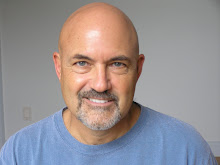
Okay, here is my recipe for a great green smoothie. I've used the principles of good food combining: the smoothie includes berries, oranges, and pineapple, with the greens so your body will love this. Great long-lasting energy. Tastes fantastic. Easy to make.
Green smoothies are the easiest thing to do to get serious about really super healthy eating. I highly recommend having them for breakfast, take it with you to work. Don't eat too early, give your system a chance to rest from digesting yesterday's food.
If you are starting out trying to add raw foods to your diet, don't worry about giving anything up, only add. And the first thing to add is a green smoothie, you will feel the difference and you will want to eat fresher healthy foods. Enjoy your smoothie!
Friday, August 15, 2008

Sunday, August 10, 2008
George Bush and Raw Food
Okay, now I know I'm losing it. I had a dream last night that I was sitting on an airplane next to George Bush. Yikes. So what do you think I talk to him about? Raw food. I was sitting there telling the president what a good thing raw food was and that if everyone in the country became a vegan, the oil saved from not growing corn to fatten the animals would be like taking every car off the road in America.
He looked at me like this a great idea. He didn't realize that. Laura was there and I think they were going to become raw foodists.
Then I woke up and realized that I've had a little too much raw food on my mind. Now, if the dream had Barack Obama in it, that would have made sense!
He looked at me like this a great idea. He didn't realize that. Laura was there and I think they were going to become raw foodists.
Then I woke up and realized that I've had a little too much raw food on my mind. Now, if the dream had Barack Obama in it, that would have made sense!
Friday, August 1, 2008
New Ideas
Yikes! My daughter Gina called me up yesterday morning with a new recipe. I've got an over abundance of zucchini in my garden right now and I've been giving it away to her.
"Cut up the zucchini into cubes, put it in the blender, add some oil and nama shoyu, garlic. Blend and put into the dehydrator."
Sounds good. I did a batch with the oil. Did another with cherry tomatoes replacing the oil. Added some hot pepper sesame oil for taste. Both came out tasting great.
This gave me the idea to try my super food smoothie as a leather in the dehydrator. Why not? Dehydrate the smoothie and take it with you wherever you go. Great for traveling. I'll put up a video of that soon.
Too much cacao powder:
I started getting mild headaches a couple of weeks ago. When I thought about what I was doing differently I realized that it might be that I was eating to much raw cacao powder. Stopped it for a day and they went away. The lesson in all of this is to use only one tablespoon of cacao powder in the chocolate smoothie. Three are way too many.
"Cut up the zucchini into cubes, put it in the blender, add some oil and nama shoyu, garlic. Blend and put into the dehydrator."
Sounds good. I did a batch with the oil. Did another with cherry tomatoes replacing the oil. Added some hot pepper sesame oil for taste. Both came out tasting great.
This gave me the idea to try my super food smoothie as a leather in the dehydrator. Why not? Dehydrate the smoothie and take it with you wherever you go. Great for traveling. I'll put up a video of that soon.
Too much cacao powder:
I started getting mild headaches a couple of weeks ago. When I thought about what I was doing differently I realized that it might be that I was eating to much raw cacao powder. Stopped it for a day and they went away. The lesson in all of this is to use only one tablespoon of cacao powder in the chocolate smoothie. Three are way too many.
Wednesday, July 30, 2008
Raw Vegan Durian Ice Cream Recipe
Okay, how about a raw ice cream dessert using the tropical fruit durian instead of artery clogging cream? I make this usually once a week, I get 5 servings out of it, and it is yummy. This is raw, vegan, healthy, and tastes great!
Thursday, July 24, 2008
Introduction: Chapter One
This is the introduction chapter to my book on raw foods.
“Take care of your body with steadfast fidelity. The soul must see through these eyes alone, and if they are dim, the whole world is clouded.”
Johann Wolfgang von Goethe
I am not sure how or why I became interested in healthy living. My upbringing would not have suggested it. The only thing I can think of is that it must have been through reading. During college I began a daily running routine. The first time I ran, barely making a mile, I came home coughing, wheezing, coughing up phlegm.
Several years later, in 1977, Jim Fixx’s The Complete Book of Running came out and I got serious. Eventually I worked up to my current practice of jogging five miles a day. I’ve since added some weight training.
My first experiments in improving my diet involved making a breakfast drink of brewers yeast and milk. In 1987 Fit For Life by Harvey and Marilyn Diamond became a big hit. Based on the principles of Natural Hygiene, which is one of the raw food branches covered in this book, the Diamonds encouraged eating lots of fruit on an empty stomach, eating live high-water content foods, and proper food combining (an example would be not eating a protein and a carbohydrate together in one meal). I read the book and tried to follow its teachings. The end result was that ever since then I have always eaten fruit for breakfast.
Two years later, the Juiceman, Jay Kordich, came through town telling his story of how juicing raw fruits and vegetables saved him from cancer. I heard him on the radio and promptly bought a juice machine. I didn’t stop at one juicer; I kept buying them until I was convinced I had the best one. I juiced carrots everyday for about ten years. (I also forced carrot juice on my kids, with uncertain results, although all three are health-conscious now and my oldest daughter juices for my grandchildren.)
I was getting the message about health everywhere I turned. Still in the late 80’s I met a woman well beyond seventy years old. She looked years younger and told me of her thirty year old boyfriend who could not keep up with her. She said that yoga was her secret. So I started doing yoga. She also told me to read John Robbins’s, Diet for a New America. The book tells of the horrors of the meat and dairy industry and advocates a vegan diet.
So convincing was the book that I became a vegetarian for one year. My daughter Gina became one permanently. I desperately wanted to stop eating animals and dairy products but I did not have the will power. I felt guilty about the slaughtering of animals but my desire for hamburgers was greater. I knew that the animal food industry was a significant polluter of our environment. Still, I couldn’t make myself change my diet.
“Transformation is through the body, not away from it.”
Eckhart Tolle
For nearly twenty years I did not make any more health changes. I ran every day, I ate my fruits and vegetables, I was very conscious of what I put into my mouth. I should have been very healthy. I was doing much better than the average American, I thought. And then I went for a physical and the doctor told me, practically with glee in his voice, that my cholesterol was 242.
How can this be? “Doc, I eat healthy foods, I run.” To which he replied, “It’s probably your genes. If you can’t get your cholesterol down by changing your diet we’ll have to put you on Lipitor.”
Oh my God, you have got to be kidding me. I am not taking a pill. There is no way I am going on a drug. Putting a foreign substance into my body is not natural. Lipitor may make my cholesterol level go down, but will it make me healthier? If I don’t change my diet, have I really made things better or have I just masked the problem? It seems to me that drug companies make a lot of money and all you get is the false sense of security that you have done something when in reality you haven’t. Eliminating the symptom doesn’t get rid of the cause.
Meanwhile, my vegetarian daughter Gina informed me that she and her husband were “going raw.”
“What do you mean? You’re not eating cooked foods anymore? Gina, I’ve always admired you for not eating meat, but this is crazy. What will you eat?” I forget what she said but I walked away thinking that she had gone too far. I knew I shouldn’t have made her drink carrot juice.
A month later I saw her and my son-in-law Stephen—they were literally glowing. I could not believe it. They were radiating health. Now I was interested. I asked her for a book on this raw food stuff (of course, I need a book) and she gave me Victoria Boutenko’s Green for Life. I read the book, fooled around for a bit with green smoothies and salads, but then gave it up. I could not stop eating hamburgers, and French fries, and pizza, and ice cream, and you name it. I’ll live with the high cholesterol. I run five miles a day, there is no way I can have heart disease. I decided to take my chances—but the seed had been planted.
In the spring of 2007 I came down with a cold that just wouldn’t go away. Finally I went to a doctor for an antibiotic to put an end to it. The nurse took my blood pressure. “Your blood pressure is 160 over 100.” She tried my other arm. Just as bad. Now I have high blood pressure along with the cholesterol.
That was it. There was no longer any denying that given all that I was doing for my health I still had problems. Since I refused to start taking pills I decided I had to do something. I began reading and everything I read pointed to “going raw.”
In the beginning it wasn’t even about being raw that got me thinking and motivated. Three books ended up on my desk. They were about how to make changes, how the food industry in America works, and the ethics of eating animals. So before I even began the process of trying to eat raw foods, in all its wisdom, the universe gave me a few tools to turn away from a cooked, animal-based diet and taught me about how to go about making these changes.
Changing For Good, by James Prochaska, John Norcross, and Carlo Diclemente, explained to me that change is a process; it does not come all at once through will power. There are stages of change. We move little by little. Change involves consciousness-raising, finding alternatives to old behaviors, expressing and accessing feelings and emotions, taking action, enjoying the rewards of change, and helping relationships. There is a reasonable way to go about making changes.
And then I found myself reading Michael Pollan’s bestseller The Omnivore’s Dilemma. Here I discovered how many of our food attitudes and beliefs are controlled and influenced by big business interests. We as a country suffer from a national eating disorder and it is fueled by the marketing of corporations and their influence over the legislative process through lobbyists. We don’t eat what we would naturally eat, we eat what we have been manipulated into eating.
The book that kicked me over the edge into action was The Way We Eat: Why Our Food Choices Matter, by Peter Singer and Jim Mason. I was confronted with the impact of my food choices and how they affected people, animals, and the planet. Singer and Mason describe the incredible cruelty that factory farming inflicts on the animals we eat. They reveal the lengths that the food industry goes to hide what actually goes on in those farms. Most alarming of all was the destruction to the environment caused by the food industry and the amount of natural resources consumed. (If Americans gave up eating animals the oil saved would be like taking every car in America off the road.) By this time, my emotions had joined what I knew in my head. I was ready to change.
Now I was ready to begin reading and experimenting with the raw food diet. I did more than experiment; I used the skills that I acquired in getting my doctorate to research what was out there on becoming a “raw fooder.” There are numerous people promoting various programs for eating a raw, living-foods diet, and many of them don’t agree. I soon found that I needed to determine who was helpful and who wasn’t. I needed to find out what was scientifically based and what was out there in la-la land.
I read everything I could get my hands on. To me, this was a life and death situation. I wanted the truth. I wanted to discount what was motivated by what people were selling; and people do have products to sell even in the raw food movement. I went to the Raw Spirit Festival in Sedona and saw first hand enough marketing and contradictory approaches to health to make my head hurt. (I had to escape and have a burger late at night when no one was looking.)
Ultimately, I had to write a book so that I could put all that I learned in one place and get my thoughts around what was the best approach to getting my health back. I am totally convinced that eating raw food is the way to go. Does that mean going 100 percent as most advocate? That is something you have to decide. I’ve tried to assemble the best of what is out there in this book. And I’ve tried to point out the best that each person has to offer. The answers to life’s challenges are not black and white. I think an eclectic approach works best; why not take what makes sense to you from everything that is out there. That is what I have done here. I’ve tried to find the common thread that runs through all the approaches to raw food. I hope it works for you.
This book is the result of what I found out as I made a serious commitment to change my diet, to change my thoughts about food, and to change my mind about what it is to live a healthy life. In the following chapters I take from all the many books I read and all the experimenting I did and try to give to you a simple guide to beginning a raw food journey. I’ve tried to inspire and motivate so you don’t have to be on your deathbed saying, “Geez, I really wish I had taken better care of myself.”
Eating more raw foods can save your life, give you more energy than you ever dreamed, and if you learn how to make some of the cacao recipes, you will certainly smile a whole lot more than you ever did. I know I do.
Books to Get You Motivated:
The Way We Eat: Why Our Food Choices Matter, by Peter Singer and Jim Mason. 2006. Rodale (Holtzbrinck Publishers).
Eat to Live: The Revolutionary Formula for Fast and Sustained Weight Loss, by Joel Fuhrman, M.D. 2003. Little, Brown and Company.
The Food Revolution: How Your Diet Can Help Save Your Life and Our World, by John Robbins. 2001. Conari Press.
The Omnivore’s Dilemma: A Natural History of Four Meals, by Michael Pollan. 2006. The Penguin Press.
“Take care of your body with steadfast fidelity. The soul must see through these eyes alone, and if they are dim, the whole world is clouded.”
Johann Wolfgang von Goethe
I am not sure how or why I became interested in healthy living. My upbringing would not have suggested it. The only thing I can think of is that it must have been through reading. During college I began a daily running routine. The first time I ran, barely making a mile, I came home coughing, wheezing, coughing up phlegm.
Several years later, in 1977, Jim Fixx’s The Complete Book of Running came out and I got serious. Eventually I worked up to my current practice of jogging five miles a day. I’ve since added some weight training.
My first experiments in improving my diet involved making a breakfast drink of brewers yeast and milk. In 1987 Fit For Life by Harvey and Marilyn Diamond became a big hit. Based on the principles of Natural Hygiene, which is one of the raw food branches covered in this book, the Diamonds encouraged eating lots of fruit on an empty stomach, eating live high-water content foods, and proper food combining (an example would be not eating a protein and a carbohydrate together in one meal). I read the book and tried to follow its teachings. The end result was that ever since then I have always eaten fruit for breakfast.
Two years later, the Juiceman, Jay Kordich, came through town telling his story of how juicing raw fruits and vegetables saved him from cancer. I heard him on the radio and promptly bought a juice machine. I didn’t stop at one juicer; I kept buying them until I was convinced I had the best one. I juiced carrots everyday for about ten years. (I also forced carrot juice on my kids, with uncertain results, although all three are health-conscious now and my oldest daughter juices for my grandchildren.)
I was getting the message about health everywhere I turned. Still in the late 80’s I met a woman well beyond seventy years old. She looked years younger and told me of her thirty year old boyfriend who could not keep up with her. She said that yoga was her secret. So I started doing yoga. She also told me to read John Robbins’s, Diet for a New America. The book tells of the horrors of the meat and dairy industry and advocates a vegan diet.
So convincing was the book that I became a vegetarian for one year. My daughter Gina became one permanently. I desperately wanted to stop eating animals and dairy products but I did not have the will power. I felt guilty about the slaughtering of animals but my desire for hamburgers was greater. I knew that the animal food industry was a significant polluter of our environment. Still, I couldn’t make myself change my diet.
“Transformation is through the body, not away from it.”
Eckhart Tolle
For nearly twenty years I did not make any more health changes. I ran every day, I ate my fruits and vegetables, I was very conscious of what I put into my mouth. I should have been very healthy. I was doing much better than the average American, I thought. And then I went for a physical and the doctor told me, practically with glee in his voice, that my cholesterol was 242.
How can this be? “Doc, I eat healthy foods, I run.” To which he replied, “It’s probably your genes. If you can’t get your cholesterol down by changing your diet we’ll have to put you on Lipitor.”
Oh my God, you have got to be kidding me. I am not taking a pill. There is no way I am going on a drug. Putting a foreign substance into my body is not natural. Lipitor may make my cholesterol level go down, but will it make me healthier? If I don’t change my diet, have I really made things better or have I just masked the problem? It seems to me that drug companies make a lot of money and all you get is the false sense of security that you have done something when in reality you haven’t. Eliminating the symptom doesn’t get rid of the cause.
Meanwhile, my vegetarian daughter Gina informed me that she and her husband were “going raw.”
“What do you mean? You’re not eating cooked foods anymore? Gina, I’ve always admired you for not eating meat, but this is crazy. What will you eat?” I forget what she said but I walked away thinking that she had gone too far. I knew I shouldn’t have made her drink carrot juice.
A month later I saw her and my son-in-law Stephen—they were literally glowing. I could not believe it. They were radiating health. Now I was interested. I asked her for a book on this raw food stuff (of course, I need a book) and she gave me Victoria Boutenko’s Green for Life. I read the book, fooled around for a bit with green smoothies and salads, but then gave it up. I could not stop eating hamburgers, and French fries, and pizza, and ice cream, and you name it. I’ll live with the high cholesterol. I run five miles a day, there is no way I can have heart disease. I decided to take my chances—but the seed had been planted.
In the spring of 2007 I came down with a cold that just wouldn’t go away. Finally I went to a doctor for an antibiotic to put an end to it. The nurse took my blood pressure. “Your blood pressure is 160 over 100.” She tried my other arm. Just as bad. Now I have high blood pressure along with the cholesterol.
That was it. There was no longer any denying that given all that I was doing for my health I still had problems. Since I refused to start taking pills I decided I had to do something. I began reading and everything I read pointed to “going raw.”
In the beginning it wasn’t even about being raw that got me thinking and motivated. Three books ended up on my desk. They were about how to make changes, how the food industry in America works, and the ethics of eating animals. So before I even began the process of trying to eat raw foods, in all its wisdom, the universe gave me a few tools to turn away from a cooked, animal-based diet and taught me about how to go about making these changes.
Changing For Good, by James Prochaska, John Norcross, and Carlo Diclemente, explained to me that change is a process; it does not come all at once through will power. There are stages of change. We move little by little. Change involves consciousness-raising, finding alternatives to old behaviors, expressing and accessing feelings and emotions, taking action, enjoying the rewards of change, and helping relationships. There is a reasonable way to go about making changes.
And then I found myself reading Michael Pollan’s bestseller The Omnivore’s Dilemma. Here I discovered how many of our food attitudes and beliefs are controlled and influenced by big business interests. We as a country suffer from a national eating disorder and it is fueled by the marketing of corporations and their influence over the legislative process through lobbyists. We don’t eat what we would naturally eat, we eat what we have been manipulated into eating.
The book that kicked me over the edge into action was The Way We Eat: Why Our Food Choices Matter, by Peter Singer and Jim Mason. I was confronted with the impact of my food choices and how they affected people, animals, and the planet. Singer and Mason describe the incredible cruelty that factory farming inflicts on the animals we eat. They reveal the lengths that the food industry goes to hide what actually goes on in those farms. Most alarming of all was the destruction to the environment caused by the food industry and the amount of natural resources consumed. (If Americans gave up eating animals the oil saved would be like taking every car in America off the road.) By this time, my emotions had joined what I knew in my head. I was ready to change.
Now I was ready to begin reading and experimenting with the raw food diet. I did more than experiment; I used the skills that I acquired in getting my doctorate to research what was out there on becoming a “raw fooder.” There are numerous people promoting various programs for eating a raw, living-foods diet, and many of them don’t agree. I soon found that I needed to determine who was helpful and who wasn’t. I needed to find out what was scientifically based and what was out there in la-la land.
I read everything I could get my hands on. To me, this was a life and death situation. I wanted the truth. I wanted to discount what was motivated by what people were selling; and people do have products to sell even in the raw food movement. I went to the Raw Spirit Festival in Sedona and saw first hand enough marketing and contradictory approaches to health to make my head hurt. (I had to escape and have a burger late at night when no one was looking.)
Ultimately, I had to write a book so that I could put all that I learned in one place and get my thoughts around what was the best approach to getting my health back. I am totally convinced that eating raw food is the way to go. Does that mean going 100 percent as most advocate? That is something you have to decide. I’ve tried to assemble the best of what is out there in this book. And I’ve tried to point out the best that each person has to offer. The answers to life’s challenges are not black and white. I think an eclectic approach works best; why not take what makes sense to you from everything that is out there. That is what I have done here. I’ve tried to find the common thread that runs through all the approaches to raw food. I hope it works for you.
This book is the result of what I found out as I made a serious commitment to change my diet, to change my thoughts about food, and to change my mind about what it is to live a healthy life. In the following chapters I take from all the many books I read and all the experimenting I did and try to give to you a simple guide to beginning a raw food journey. I’ve tried to inspire and motivate so you don’t have to be on your deathbed saying, “Geez, I really wish I had taken better care of myself.”
Eating more raw foods can save your life, give you more energy than you ever dreamed, and if you learn how to make some of the cacao recipes, you will certainly smile a whole lot more than you ever did. I know I do.
Books to Get You Motivated:
The Way We Eat: Why Our Food Choices Matter, by Peter Singer and Jim Mason. 2006. Rodale (Holtzbrinck Publishers).
Eat to Live: The Revolutionary Formula for Fast and Sustained Weight Loss, by Joel Fuhrman, M.D. 2003. Little, Brown and Company.
The Food Revolution: How Your Diet Can Help Save Your Life and Our World, by John Robbins. 2001. Conari Press.
The Omnivore’s Dilemma: A Natural History of Four Meals, by Michael Pollan. 2006. The Penguin Press.
Tuesday, July 22, 2008
Raw Pasta and Marinara Sauce Recipe
On Sunday I brought a raw pasta and raw marinara sauce dish to a pot luck dinner. I usually bring a pesto pasta salad, cooked. I usually bring home half of it. This time the whole bowl was gone within an hour.
When I was leaving, several people saw me with the bowl and asked if I had made the spaghetti. I said yes. They wanted the recipe. They loved it! So, here is a video of how I made it that day.
When I was leaving, several people saw me with the bowl and asked if I had made the spaghetti. I said yes. They wanted the recipe. They loved it! So, here is a video of how I made it that day.
Wednesday, July 16, 2008
Victoria Boutenko and 12 Steps to Raw Foods
Here is my chapter on Victoria Boutenko and her 12 steps to raw foods:
I enjoyed the simplicity and inspiration of Boutenko’s first book so much that I decided to give her raw food book a try. Not that I was intending to become a raw food person, but I was interested in improving my eating habits. One doesn’t have to give up cooked foods entirely to benefit from including more raw foods in their diet.
The subtitle of her book is How to End Your Dependency on Cooked Food. It is kind of like a 12 step program for food abusers. And most of us, whether we know it or not, do eat food the way addicts consume drugs and alcohol. If you don’t believe me, try giving up cooked foods cold turkey for a day and see how fast you start craving your favorite cooked foods, any cooked foods.
I think I was in a good place to begin considering incorporating more raw foods into my life. I knew I needed to lose some weight. I knew from going to my doctor for a physical that my cholesterol was high. And I wanted more energy in my life. Besides, I had seen what it was doing for my daughter and son-in-law.
Part one of Boutenko’s book is about how cooking food destroys nutrients and increases the risk for heart disease, diabetes, and cancer. She explains how cooking creates advanced glycoxidation end products (AGEs), very toxic molecules that get absorbed by the body and do such nasty things as stiffen muscles (including the heart), reduce flexibility in tendons and ligaments, cause inflammation, and speed up the aging process.
In part two of her book Victoria discusses how we have become addicted to food. We have become dependent on processed cereals and breads, pasteurized drinks, grilled meats and fish. I was amazed at how little I was eating was not a living food anymore. Salad and fruit and that’s about it for most of us, and those are only side aspects of our diets. Our main meals are almost always cooked foods.
These days I have to laugh to myself when I hear someone describe to me their healthy diets. They’ll say “I have hot oatmeal for breakfast with berries on top. Then I have a chicken salad for lunch and fish with rice for dinner.” Or something like that. I say to myself, don’t they understand that the oatmeal is cooked to a mush, the chicken is filled with antibiotics, and the fish is most likely farmed and they have antibiotics (along with other things), too? Of course, the rice is cooked to death. What makes all of this even more frustrating is that the so-called nutrition experts on television reinforce this fake healthy diet.
The idea that eating cooked food is an addiction is a major contribution to understanding how to improve our dietary habits. No one would think that the typical diet is an addiction, but try to go one day without cooked foods and you will see what I mean. This is a very important point that should not be missed. Cooked foods are an addiction, just as powerful cigarettes, alcohol, drugs, and relationships can be. Knowing this will help you to make healthier food choices.
When I began adding raw foods to my diet it was not the raw food that caused me any problems. The more recipes I tried the more fun I had. My smoothies were delicious. My salads and the interesting dressings that my daughter gave me were totally satisfying. And the mock tuna salad, the flaxseed crackers, and cauliflower “mash potatoes” tasted wonderful. But even with all of these foods, and not being hungry at all, I still wanted to have something cooked at the end of the day, even if it was only a piece of toast and butter.
Victoria does argue that just like an alcoholic we should give up cooked foods entirely, that it is actually easier in the long run. And I think that for some people that would be the way to go. I cannot do this. I don’t think I could bring myself to the point where I would never ever want a hamburger again. I may not eat one but for me knowing that if I really want cooked food I can have it without feeling guilty is important to my sense of freedom. After all, I am trying to be reasonably, rationally, and realistically raw, not absolutely raw.
You may be thinking at this point that the analogy that food is addictive is helpful, but a little of an exaggeration. Well, Victoria points out in her book that plenty of research shows that cooked foods contain opioid peptides that reach the opiate receptors in our nervous systems. These opioid peptides are particularly present in dairy products, meats, poultry, and fish. (Another reason to eat a vegan diet.) Believe it or not, cooked foods are at least somewhat physically addictive.
12 Steps to Raw Foods
Here are Boutenko’s 12 steps to transitioning to a raw food diet. I have altered them a little, adding some of my own observations and trying to be brief. I recommend reading the book itself.
1. Become aware that you do have an addiction to cooked foods. Be honest. Can you get through a day without cooked foods and not feel those cravings? Try it.
2. Add healthy foods to your diet; don’t think about giving anything up and depriving yourself. Many of our food cravings come because we do not get enough nutrients. Add a green smoothie and a large salad to your diet. Greens are the most nutritious foods on the planet.
3. Learn how to prepare raw food recipes. Get some raw cookbooks. Ask around for good ideas on what to eat. Find out what other people do. Get the tools for make raw foods. Buy a good blender and dehydrator. You probably already have a food processor.
4. Don’t judge yourself or others for not eating raw foods. Take the pressure off yourself, family, and friends. Have fun. Think of this as adding something to your life, not taking anything away.
5. Avoid temptations. For me this means not keeping cooked foods in the house and not going out to eat very often. I can’t help it; if it is in the house I will most likely eat it, so if I don’t want cooked foods I don’t buy them. It’s the same with restaurants. You can only order salad so many times a week. I also find that I am a lot less tempted on a stomach full of my green smoothie. If you are going somewhere where you know you will be tempted—eat first.
6. Get support. The encouragement and ideas from my daughter Gina have helped me every step of the way. I could not have made the changes to my diet without her support and help. Support also comes from reading books, raw web sites, newsletters, and attending festivals.
7. Gratitude and forgiveness. Be thankful for learning about this healthy way of living. We may slip at times, but at least we are on the path. We know about raw foods, most people are not even aware of what they are doing to their bodies by eating cooked food all the time. Forgiveness is essential, too. It is hard to make the right choices when we hold grievances against other people…and ourselves.
8. Actualize your dreams. Your life is going to change. You are going to feel happier than you have ever felt before. You will have more energy and need less sleep. Now you can live your dreams. And the best dreams are those that give back to others.
9. Utilize other healthy practices. Exercise is essential. Move your body. Run, walk, do yoga, swim, incorporate some form of exercise into your daily routine. Get some sunshine.
10. Gain clarity. Spend time with yourself just being aware. Meditate, read; learn to live in the present moment.
11. Find your mission in life. True happiness comes from helping others. Discover what you are meant to do. Where is your passion? What is it that truly gets you excited? Almost every person I know who begins eating a raw vegan diet finds a new sense of spirituality in his or her lives. What does this mean for you?
12. Give support to others. When you help others you are helping yourself. Every time you share what you have learned, you learn it all over again only better. Your life becomes so much richer. We can’t live a healthy lifestyle alone.
I met Victoria and her daughter at the Raw Spirit Festival in Arizona in 2007. Victoria gave an inspiring talk on how she discovered the benefits of green smoothies. Her daughter Valya was working on a raw food documentary and we talked about how different people experienced healing from various illnesses. I also attended a food preparation demonstration given by Victoria’s son Sergei. The children are adults now and were looking quite healthy.
I learned from Victoria Boutenko early on in my raw food journey the importance of adding healthy raw foods to my diet and not to think of this as giving up foods that I loved. I would not have taken the first step had someone told me that I had to give up cooked foods all together. But I could make a green smoothie, and by experimenting they became so enjoyable I had to keep myself from drinking them too fast.
By eating more green leafy vegetables my body became more nourished and being more nourished desired less and less of the junk food and animal foods that I was used to eating. Slowly my tastes we changing. A raw food diet didn’t sound quite so strange.
I enjoyed the simplicity and inspiration of Boutenko’s first book so much that I decided to give her raw food book a try. Not that I was intending to become a raw food person, but I was interested in improving my eating habits. One doesn’t have to give up cooked foods entirely to benefit from including more raw foods in their diet.
The subtitle of her book is How to End Your Dependency on Cooked Food. It is kind of like a 12 step program for food abusers. And most of us, whether we know it or not, do eat food the way addicts consume drugs and alcohol. If you don’t believe me, try giving up cooked foods cold turkey for a day and see how fast you start craving your favorite cooked foods, any cooked foods.
I think I was in a good place to begin considering incorporating more raw foods into my life. I knew I needed to lose some weight. I knew from going to my doctor for a physical that my cholesterol was high. And I wanted more energy in my life. Besides, I had seen what it was doing for my daughter and son-in-law.
Part one of Boutenko’s book is about how cooking food destroys nutrients and increases the risk for heart disease, diabetes, and cancer. She explains how cooking creates advanced glycoxidation end products (AGEs), very toxic molecules that get absorbed by the body and do such nasty things as stiffen muscles (including the heart), reduce flexibility in tendons and ligaments, cause inflammation, and speed up the aging process.
In part two of her book Victoria discusses how we have become addicted to food. We have become dependent on processed cereals and breads, pasteurized drinks, grilled meats and fish. I was amazed at how little I was eating was not a living food anymore. Salad and fruit and that’s about it for most of us, and those are only side aspects of our diets. Our main meals are almost always cooked foods.
These days I have to laugh to myself when I hear someone describe to me their healthy diets. They’ll say “I have hot oatmeal for breakfast with berries on top. Then I have a chicken salad for lunch and fish with rice for dinner.” Or something like that. I say to myself, don’t they understand that the oatmeal is cooked to a mush, the chicken is filled with antibiotics, and the fish is most likely farmed and they have antibiotics (along with other things), too? Of course, the rice is cooked to death. What makes all of this even more frustrating is that the so-called nutrition experts on television reinforce this fake healthy diet.
The idea that eating cooked food is an addiction is a major contribution to understanding how to improve our dietary habits. No one would think that the typical diet is an addiction, but try to go one day without cooked foods and you will see what I mean. This is a very important point that should not be missed. Cooked foods are an addiction, just as powerful cigarettes, alcohol, drugs, and relationships can be. Knowing this will help you to make healthier food choices.
When I began adding raw foods to my diet it was not the raw food that caused me any problems. The more recipes I tried the more fun I had. My smoothies were delicious. My salads and the interesting dressings that my daughter gave me were totally satisfying. And the mock tuna salad, the flaxseed crackers, and cauliflower “mash potatoes” tasted wonderful. But even with all of these foods, and not being hungry at all, I still wanted to have something cooked at the end of the day, even if it was only a piece of toast and butter.
Victoria does argue that just like an alcoholic we should give up cooked foods entirely, that it is actually easier in the long run. And I think that for some people that would be the way to go. I cannot do this. I don’t think I could bring myself to the point where I would never ever want a hamburger again. I may not eat one but for me knowing that if I really want cooked food I can have it without feeling guilty is important to my sense of freedom. After all, I am trying to be reasonably, rationally, and realistically raw, not absolutely raw.
You may be thinking at this point that the analogy that food is addictive is helpful, but a little of an exaggeration. Well, Victoria points out in her book that plenty of research shows that cooked foods contain opioid peptides that reach the opiate receptors in our nervous systems. These opioid peptides are particularly present in dairy products, meats, poultry, and fish. (Another reason to eat a vegan diet.) Believe it or not, cooked foods are at least somewhat physically addictive.
12 Steps to Raw Foods
Here are Boutenko’s 12 steps to transitioning to a raw food diet. I have altered them a little, adding some of my own observations and trying to be brief. I recommend reading the book itself.
1. Become aware that you do have an addiction to cooked foods. Be honest. Can you get through a day without cooked foods and not feel those cravings? Try it.
2. Add healthy foods to your diet; don’t think about giving anything up and depriving yourself. Many of our food cravings come because we do not get enough nutrients. Add a green smoothie and a large salad to your diet. Greens are the most nutritious foods on the planet.
3. Learn how to prepare raw food recipes. Get some raw cookbooks. Ask around for good ideas on what to eat. Find out what other people do. Get the tools for make raw foods. Buy a good blender and dehydrator. You probably already have a food processor.
4. Don’t judge yourself or others for not eating raw foods. Take the pressure off yourself, family, and friends. Have fun. Think of this as adding something to your life, not taking anything away.
5. Avoid temptations. For me this means not keeping cooked foods in the house and not going out to eat very often. I can’t help it; if it is in the house I will most likely eat it, so if I don’t want cooked foods I don’t buy them. It’s the same with restaurants. You can only order salad so many times a week. I also find that I am a lot less tempted on a stomach full of my green smoothie. If you are going somewhere where you know you will be tempted—eat first.
6. Get support. The encouragement and ideas from my daughter Gina have helped me every step of the way. I could not have made the changes to my diet without her support and help. Support also comes from reading books, raw web sites, newsletters, and attending festivals.
7. Gratitude and forgiveness. Be thankful for learning about this healthy way of living. We may slip at times, but at least we are on the path. We know about raw foods, most people are not even aware of what they are doing to their bodies by eating cooked food all the time. Forgiveness is essential, too. It is hard to make the right choices when we hold grievances against other people…and ourselves.
8. Actualize your dreams. Your life is going to change. You are going to feel happier than you have ever felt before. You will have more energy and need less sleep. Now you can live your dreams. And the best dreams are those that give back to others.
9. Utilize other healthy practices. Exercise is essential. Move your body. Run, walk, do yoga, swim, incorporate some form of exercise into your daily routine. Get some sunshine.
10. Gain clarity. Spend time with yourself just being aware. Meditate, read; learn to live in the present moment.
11. Find your mission in life. True happiness comes from helping others. Discover what you are meant to do. Where is your passion? What is it that truly gets you excited? Almost every person I know who begins eating a raw vegan diet finds a new sense of spirituality in his or her lives. What does this mean for you?
12. Give support to others. When you help others you are helping yourself. Every time you share what you have learned, you learn it all over again only better. Your life becomes so much richer. We can’t live a healthy lifestyle alone.
I met Victoria and her daughter at the Raw Spirit Festival in Arizona in 2007. Victoria gave an inspiring talk on how she discovered the benefits of green smoothies. Her daughter Valya was working on a raw food documentary and we talked about how different people experienced healing from various illnesses. I also attended a food preparation demonstration given by Victoria’s son Sergei. The children are adults now and were looking quite healthy.
I learned from Victoria Boutenko early on in my raw food journey the importance of adding healthy raw foods to my diet and not to think of this as giving up foods that I loved. I would not have taken the first step had someone told me that I had to give up cooked foods all together. But I could make a green smoothie, and by experimenting they became so enjoyable I had to keep myself from drinking them too fast.
By eating more green leafy vegetables my body became more nourished and being more nourished desired less and less of the junk food and animal foods that I was used to eating. Slowly my tastes we changing. A raw food diet didn’t sound quite so strange.
Subscribe to:
Posts (Atom)