Thursday, April 3, 2008

The Long-Living People


One chapter of the book I am writing on raw foods includes the long-living people. If there are people living long and healthy lives, could we not learn from them? Here is that chapter:

The Long-Living People

Considering the natural diets of our closest relatives in the wild, the primates, is one way to think about what we would eat if we were not influenced by culture or people selling a product for profit. It seems to me that a natural diet would be best. Another approach would be to find people and societies that live the longest and have the healthiest lives.

In the next two chapters we will do exactly that. First we look at four cultures where people live to be extremely old and healthy at the same time. Then we will examine on of the largest studies concerning the relation of diet to health ever conducted—the China Study.

The Abkhasians

In the Caucasus Mountains of southern Russia live the Abkhasians. In the 1960’s the Soviets made claims that the people there were living to be well into their 100’s. One Abkhasian got his picture on a postage stamp for being 168 years old. The Dannon yogurt company went out there and made a popular commercial featuring a 110-year-old mother telling her 89-year-old son to eat his yogurt.

It turns out that these people were not as old as they claimed. They were probably “only” in the 90’s and early 100’s. More important than their years was their physical fitness and mental alertness. Researchers found them to be enjoying extremely good health. Only the very oldest had wrinkles. Few needed glasses and most still had their own teeth.

What was their secret? How did they keep healthy into old age? (You are probably wondering what this has to do with raw food.)

The Abkhasians did get a lot of exercise living in the mountains. There is no question that physical activity is essential. They maintained their physical fitness into old age by not retiring and working in the orchards and gardens.

The other factor contributing to their health is diet. Breakfast consists of fresh salad, cornmeal porridge, and a fermented drink made from goat’s milk. Between meals they eat a great deal of fruit. Nuts are also an important part of their diet. They eat almost no meat. They do not eat fatty foods, sugar, salt, or butter. Overeating is considered socially inappropriate.

The Abkhasians do not eat yogurt despite the Dannon commercials. The average cholesterol level of those over 100 is below 100. There is one more thing that may contribute to their long productive lives—the elders are respected and revered simply by being old.

The Vilcabambans

Three hundred miles to the south of Quito, Ecuador, high in the Andes mountains, is the village of Vilcabamba, it is also called the Valley of Longevity. Here the inhabitants frequently live into their 100’s with youthful vigor and vitality. Degenerative diseases do not exist there. No cancer, no diabetes, no osteoporosis, no Alzheimer’s. No heart disease or high blood pressure.

International scientists have studied the Vilcabambanas for half a century and the conclusion has been that their health is the result of their diet and high levels of physical activity. There are no supermarkets in Vilcabamba, no processed foods. Vegetables and fruits are picked fresh daily and eaten on the spot. Occasionally they have milk or eggs, but their diet is essentially fruits, vegetables, seeds, nuts, beans, and whole grains.

It is interesting to note that their protein comes from vegetables, whole grains, and beans. Their fat comes from avocados, seeds, and nuts. They do not consume a large amount of calories compared to American standards. Overweight people cannot be found in Vilcabamba. Because of where they live fresh fruit and vegetables are available year round.

The Hunza

Twenty thousand feet up in the Himalayan Mountains in northwestern Pakistan is Hunza. Probably the most famous of all for being a place where the people live well past 100 and where they have perfect eyesight, no cancer, no heart disease, and no crime. (Also, no money, no banks, no taxes, and no stores.)

It isn’t that these people just are not sickly, they are strong and active their whole lives. They swim in ice-covered streams, the build retaining walls for their gardens; they play wild games of volleyball and polo. What makes them so healthy?

Again, a look at their diet shows that it is quite different from what we have been told is necessary for health by the food industry. They eat less than half the protein and a third of the fat that we do. And it all comes from fruits, vegetables, and grains. They do not eat animals. No food is processed and it is all fresh. The closest they come to processing is drying their fruits. They have a law against spraying their gardens with pesticide.

The Hunzas eat a lot of apricots, and a lot of sprouts. Served at every meal is their bread called “chappti.” They call it a bread, but it is not really baked. After grinding fresh wheat, barley, or millet, they knead it with only water, no yeast, and then place it on a grill for a moment, just long enough to warm it.

The Hunzas and the other long-living people didn’t eat a mostly raw vegetarian diet because they wanted to—they didn’t really have a choice. High up in the mountains there isn’t a lot of wood for cooking and food to keep animals. So, they mostly eat plants and eat them raw.

It isn’t just that these people live to be old, it’s that they are disease free that is most impressive. The old do not suffer from fatigue, poor eyesight, high blood pressure, or obesity. Very much like the people of Abkhasia and Vilcabamba.

Besides extraordinary good health their diets are quite similar. Approximately 70% of their calories come from carbohydrates (in the form of fresh fruits, vegetables, and whole grains), 20% from fat (from nuts and seeds), and 10% from protein. The Abkhasia include about 10% animal products, but the Vilcabamba and Hunza only 1%. Almost no salt is used and no sugar or processed food.

The Okinawans

Birth records have been meticulously kept in Okinawa since 1879. So the ages of those long-lived people on this southernmost Japanese island chain are not disputable. Every city and town has a family register dating back well over a hundred years. And since 1975 the Japan government has been studying the health and longevity of these people.

There are 800 centenarians out of a population of 1.3 million. The Okinawans do not retire. Is this what keeps them healthy or do they not retire because they are so healthy? According to researchers there are four reasons for their extraordinary well being. Social support, psycho-spiritual attitudes, diet, and exercise.

Until relatively recently Okinawa was a separate country from Japan and evolved with a different culture, diet, and religious beliefs. And their incidence of disease is also different from Japan (and the West). Like the Abkhasians, Vilcabambans, and the Hunza, heart disease, cancer, diabetes, and other diseases are rare.

The Okinawan diet consists of a lot of sweet potato, green leafy vegetables, and protein from soy foods such as tofu and miso. They do eat a significant amount of fish, also. But diet alone is not the secret to their success. They get good nights sleep. That may be related to what they eat because it is hard to sleep well when your stomach is busy digesting a heavy meal. The Okinawans also have a strong sense of responsibility and hold themselves accountable for their lives.

Probably more than anything, and similar to the other long-lived people in this chapter is that the Okinawans do not consume a lot of calories compared to the standard American diet. By consuming mostly fruits, vegetables, and grains, they get the nutrition they need without the calories.

Living Long

Maybe we could learn something from people who seem to live long, active, disease-free lives. It only makes sense to pay attention to others who are succeeding at something. In this case it is something near and dear to all of us—our health.

It seems to me that exercise and working outdoors is primary. Eating a plant-based diet is also primary. Having some kind of spiritual practice is primary. And staying connected to other people is primary. None of these alone is sufficient. All of the long-lived peoples of the world incorporate all of these components into their lives. A life-style based on these principles, and not on what advertisers and promoters of products, would surely be an improvement for all of us.

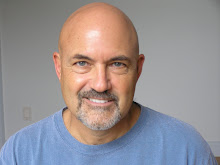
Friday, March 28, 2008

Eckhart Tolle, Is He Really Sixty?

Whatever he is eating, that's what I want. Eckhart Tolle is doing an on line web class with Oprah on his new book, A New Earth. I have learned a great deal from him and what I have learned has made a big difference in my life, spiritually.

Now, I just found out that the guy is sixty years old. He looks like a kid, maybe forty at most. No wrinkles whatsoever, bright eyes, vibrant. I don't know if he eats raw food or not, but whatever he is doing, that's what I want.

I have seen a lot of raw food, health nut types, and I've never been impressed. (Except for Jack LaLanne.) They look okay, but I'd never say, "wow, I want to be like that when I get old." But Eckhart Tolle should be the poster boy for good health. That is how I want to look at sixty, which isn't that far away.

All of this goes to prove that spirituality is more important that diet. Do you want to lose weight and get healthy? Start meditating. And read Tolle's books!


Saturday, March 22, 2008

Are Humans Really Omnivores?

I am researching the chapter on what kind of foods we are designed to eat for my book Reasonably, Rationally, Realistically Raw, and I see that carnivore is the name that we have given animals that mostly eat other animals. Plant eating animals we call herbivore. Omnivores eat plants and animals. Simple enough, right?

Well, I wanted to find out why animals ate what they ate. So I started exploring the anatomy, physiology, and biochemistry of the different groups. Carnivores are characterized by having claws, sharp teeth, short smooth colons and digestive tracts, rasping tongues, no lateral jaw movement, and an acidic saliva and urine. They also eat large meals, swallowing their food whole. They have no digestive enzymes. And they control their body temperature by hyperventilating.

Herbivores have flattened nails or hooves, broad blunted incisors and flat molars, long sacculated colons, smooth tongues, side to side jaw movement, non-acidic saliva and urine. They eat smaller meals more frequently, chewing and crushing their food. Digestive enzymes are important to their nutrition. And they perspire.

When it came to omnivores, I found that anatomically and physiologically, omnivores were almost identical to carnivores. Think grizzly bear.

As I researched herbivores I found that primates were not really herbivores, but frugivores (animals that eat mainly fruit). That made sense because primates do not have the same kind of digestive system that cows and other herbivores have. (Fruit is easier to digest than grass or seeds.) Our closest living relatives in the animal world, sharing more that 98 percent of our DNA, live on diets consisting of approximately 80 percent fruit. (Bonobo chimps.)

I have lived my whole life thinking I was an omnivore. Michael Pollan made a lot of money writing The Omnivore's Dilemma. So why all the confusion? Simple. We have confused the verbs "to do" with "to be." Just because we can eat other animals doesn't mean that we should. I may say stupid things, that doesn't mean that I am a stupid person.

Yes, people can eat animals, we can also eat cardboard, that doesn't mean that it's healthy.

Thursday, February 28, 2008

Raw In Nicaragua

In the past I have had real hard time eating raw, or mostly raw, or mostly vegan. Leaving for this trip I was determined to do better...and I have.

I brought with me a small travel blender, a coffee grinder, goji berries, cacao, nuts, seeds, and whole wheat spaghetti. This has made all the difference. I've had no problem eating fruits for breakfast and now that I have a refrigerator (I rented an apartment with a kitchen) I am keeping lots of lettuce and making large salads every day.

One big lesson I learned today: bananas are plentiful and healthy, but not a lot of fun to eat every day. Today I used them to make my green smoothie. Tasted great with a little pineapple and romaine. That leaves me a lot of other fruit to eat later on when I get hungry again. Then I'll have goji berries and cacao for lunch and some brocholi.

I confess that I have been eating meat at one meal a day. I just haven't figured out how to replace dinner. I dont' have other options like I do at home. If anyone has suggestions please send them. I know, I could just not eat any more and be satisfied with fruit and veggies. I will try. Maybe fasting would help. Or popcorn.

Wednesday, January 2, 2008

Inspiration

I limped to the finish line of 2007. The Holidays were a struggle, especially having to eat out frequently. But that is over, I've learned some lessons there and now I'm ready to begin the new year. While I often did not eat as I know I should have I am building on what I learned this past year and moving forward.

And one of the lessons learned in 2007 was that success comes from being motivated. Most of my motivation last year came from the many books I read. Yesterday it came from watching a video. I highly recommend Get Healthy Now! available on Vegsource.com. Over 13 hours of inspiration on this video. I would buy it if only for the talk by my favorite doctor Joel Fuhrman, M.D.

Dr. Fuhrman gives practical information on how to actually go about eating healthy meals. His four food groups are Salads, Soups, Smoothies, and Sorbets. He gives directions for making great salad dressings, all kinds of healthy soups, green smoothies, and sorbets that may make me forget about ice cream. The best thing is that he provides outlines for the basics for all of these meals. I got totally inspired because most importantly he gave me hope, now I could see what I actually could make to eat and how to do it.

In 2007 I learned what not to eat and to eat as much raw food as possible. My resolution for 2008 is to learn what I can eat and how to prepare healthy delicious meals. This video from Vegsource is the beginning. After that...I think I'll take some "uncooking" classes.

For me the key is to get inspired, at least long enough until my food choices become habit and the old ways are totally gone. This is a start.

Sunday, December 23, 2007

I read this recently on the Going Raw Yahoo Group. It is one of the clearest descriptions of what to eat and how to improve one's health. I love its simplicity, directness, and intuitive honesty. It rings full of truthfulness.

One person's approach to health:

No drugs, simply plants 50% raw, 50% cooked either steamed, blanched
or stir fried in very little oil. Zero processed foods, no cheating,
no odd ball super foods / fad foods. A little DHEA, B-12 & D all
from vegan sources, a little sun, a little walking, nothing extreme.
Been several years now, heard all the stars of the raw movement and
arrived at my own theory, which is that it is way more important what
you do not eat, than what you do eat. Theory on what to eat is the
widest possible variety of plants, as Fuhrman points out plants
contain important phytonutrients and barely 5% have been identified,
so don't get stuck eating mostly the same dozen plants, try to eat
ALL of them.

I find the longer I do it, the more I cut back on transitional stuff
like nuts, avocados, etc., I still eat them, just not a lot of them.

After several years, the authors and things I suggest most are:
ravediet.com
drfuhrman.com
drmcdougal.com
heartattackproof.com
chinastudy.com

I happen to be more scientifically than emotionally oriented and
personally believe that there is a lot of really bad science in the
raw business. I trust the info at the above places. When people
tell me about theories from the 30's where all current study is in
some obscure place in a foreign language, my eyes glaze over.

As I have said before, I find no need to justify eating this way. My
heath was very bad and I was about to go over the cliff, I started
eating this way and everything got better quickly and the problems
went away. People ask me what the specific mechanisms are that are
responsible as though there is some sort of "active ingredient". I
reply that the specific scientific mechanism is that I stopped
eating crap, dead and decaying stuff and started eating 100% plants,
there ya go, the whole scientific explanation.

I think a highly overlooked factor is eating LARGE quantities of raw
plant fiber (thanks to Vitamix it's easy). Someone (MD) told me you
should eliminate something that looks like it came from an elephant
and it should take you about 10 seconds to so. This goes to the
various thoughts on colon stuff, which is basically that eating tons
of raw plant fiber is like eating a couple pounds of ground up scotch
brite pads, that ought to keep you pretty well scrubbed out without
doing anything else.

Seems to me that there is no point studying it in more detail, as
further study just seems to reinforce what we already know... the
leaner you are the longer you live, the lower your cholesterol the
fewer diseases you get. Refer to China Study, eat what the people
that are the healthiest, longest lived people eat. Want facts, buy
Fuhrman's "Eat To Live" and study the extensive footnotes (that guy
is a real scientist).

There is plenty of study on what to do, people don't need to study it
more, they just need to do it and be strict about it. Sure folks can
go off on their tangents as long as they are under the umbrella
of "eat plants" and everything should be fine.

Happy Holidays
Mark

Saturday, December 22, 2007

It Ain't Easy

Yikes! I thought it was hard being as raw as possible here in Westerly. Living away from home was ten times as hard! Five weeks in Nicaragua followed by the Christmas Holidays. It could have been worse, but...

In Nicaragua, living in a hostel room, without hot water, I did my best. I kept a supply of pineapples, watermelon, bananas, and oranges in my window. Breakfast was no problem. What came after was. There were no green leafy vegetables to be had. I could get a mixed salad of cabbage, carrots, onions, and peppers, and often had that for lunch, but that was not filling.

I was able to get a fresh young coconut most days, either in the market in Leon, or from one of the young girls selling them on the beach. That was filling. But, after that, my choices for dinner were not good. I succumbed to eating animals.

On the plane home from Nicaragua all I could think about was having a big salad with green leaf lettuce and Gina's raw creamy balsamic dressing with flaxseed powder on top.

Being home has not helped. For one reason or another I've had to eat out almost every night and I have had problems there. Even when I ordered a Veggie Focaccia Sandwich at 84 High Street Cafe, they sent it with chicken.

So, my blood pressure is up, my weight is up, and so is my determination to figure out a way to make this work!

Tonight, I am going out to dinner with my kids. I promise you, I am going have so much salad before I leave this house that I will not be able to eat anything bad. Okay, I am allowing myself a little sushi, that's raw, isn't it?

What a freaking struggle this is. It's a struggle, but it isn't that bad. It's just that you always have to pay attention, bad habits just so easily work their way back into your life. I feel like I'm in a tug of war for what goes into my mouth. The minute I look the other way, poof, some dead animal ends up working its way through my digestive system. And neither of us are happy about that. There has to be a better way, and I am determined to find it. Meanwhile, I'm drinking my green smoothies and munching my huge green salads. I'm on the path, I just have to get farther along.